Featured Post
Peace Corps Georgia Assignment: a Brief Summary 2014-2016
As I close out my Georgia Peace Corps Service 2014-2016 I would like to answer a few questions, and also summarize my service. It seems...

Showing posts with label Peace Corps. Show all posts
Showing posts with label Peace Corps. Show all posts
Tuesday, September 13, 2016
Peace Corps Georgia Assignment: a Brief Summary 2014-2016

As I close out my Georgia Peace Corps Service 2014-2016 I would like to answer a few questions, and also summarize my service. It seems like a daunting task, but Peace Corps thrives on qualitative and quantitative reporting, so I have at least had some practice.
Questions that have surfaced from my supportive readers include:
What were my goals and what did I accomplish?
What was my daily routine?
Am I glad I did it?
Personally what have I gained? and what plans for the future?
What were my
goals and what did I accomplish?
It is most difficult to say what one ‘accomplished’ in
any Peace Corps assignment. The reason is that our job is to assist,
support, enable, and facilitate our Georgian counterparts in what they try
to accomplish. We are not supposed to lead but encourage, not to dictate but
suggest, not to yell, but gently whisper. Personally it has been good training
for me as my children grow and need support, but not by an authoritative mother
figure.
Also, it seems I spent more time on relationship
building, integrating into the local culture, struggling to improve my language
skills, and figuring out what and how to eat - which is all part of the Peace Corps experience. But let me share what I have worked on.
We have two programs in Georgia: the English education volunteers that support English teachers in the schools (EE), and the Individual/Organizational Development (IOD) volunteers. I am in IOD. This concise summary comes from my Description of Service, a mandatory report required before we leave our post.
We have two programs in Georgia: the English education volunteers that support English teachers in the schools (EE), and the Individual/Organizational Development (IOD) volunteers. I am in IOD. This concise summary comes from my Description of Service, a mandatory report required before we leave our post.
"Ms.
Dixon was assigned as an IOD Volunteer in Koda Community Education Center
(CEC), located in an Internally Displaced Persons (IDP) Settlement south of
Tbilisi. The ex-Soviet military base was reconditioned and is home to 400
families displaced from the 2008 War with Russia in South Ossetia. She worked with the director of the Center to
help train the IDPs and village locals for new jobs, new business initiatives,
and programs to support mental, physical, and financial improvements for the
residents.

 |
| Psychologist held weekly sessions |
 |
| Volunteering during harvest season with youth |
 |
| Selling our wares at festivals |
 Art Koda, a nascent social enterprise grew substantially after the first year of Ms. Dixon’s service during
which she helped establish its first growth strategy, goals, financial
objectives, tracking, and formal income statements.
It established two new distribution routes, and supported canceling
unprofitable programs. Nine women
currently have close to a living wage through Art Koda’s training and marketing
initiatives. The profit allowed for and paid for one new full-time staff member,
a Social Enterprise Director.
Art Koda, a nascent social enterprise grew substantially after the first year of Ms. Dixon’s service during
which she helped establish its first growth strategy, goals, financial
objectives, tracking, and formal income statements.
It established two new distribution routes, and supported canceling
unprofitable programs. Nine women
currently have close to a living wage through Art Koda’s training and marketing
initiatives. The profit allowed for and paid for one new full-time staff member,
a Social Enterprise Director. In Ms. Dixon’s second year the residents of the Koda, having been deeded their apartments by the government, started making more permanent commitments to the area. Agricultural and livestock initiatives became more important. ACWW, an international foundation, supported a new farm co-op initiative as well as new irrigation opportunities for 44 people which Ms. Dixon spearheaded throughout the proposal and implementation phases. In a separate initiative she initiated and supported a crowd funding project resulting in a community garden creation, designed to continue yearly.
 |
| Ribbon cutting on our new co-op irrigation well |
 |
| Working on our community garden |
On a smaller scale, but equally important, Ms. Dixon helped IDP youth to realize they had control of their future. They could earn money for their goals, not always depending on charity, as had been the reality of their young lives. They did this successfully in the winter of 2015, selling sachets at Christmas bazaars to fund their Club. She also taught sessions on needs and wants, budgeting, savings and loans, and tracking expenses.
Ms Dixon supported Georgian
counterparts with management mentoring, business processes, proposal writing, translation, and editing. She supported local high
school and college students in career counseling and with English conversation
which helped one youth receive acceptance at an English speaking college abroad, and one youth with a business opportunity grant which resulted in two
new shops in the settlement, bringing in needed fresh produce and employing
three to four women part-time. As a
secondary project Ms. Dixon joined her English
Conversation Club to volunteer at the European Youth Olympic Festival 2015 hosted
in Tbilisi and attended by 50 countries. It was a wonderful experience and good
practice in English for the club.
It became clear that Georgians
as well as foreigners wanted to learn more about the Georgian IDPs and their
status. Thus Ms. Dixon began engaging
international organizations to come to the Community Education Center for Open
House Days, for Art Koda Georgian Handicraft Workshops, and for international
school field trips. During her service,
two international school students attended days at the Center, with tours, craft making
and traditional Georgian lunches. With the successful completion of workshops
and field trips, the Center set a system in place to continue scheduling these
events."

 |
| Craft workshops for visitors |
What
was my daily routine?
During the workweek (Tuesday-Saturday) I awoke with the
sunrise and roosters, whenever that was.
It was the first time in a long time I never set my alarm. After calving season, I also awoke to the
cows mooing for their offspring. They
must have been separated, but what a racket!
Since we were in this low flat land with little vegetation, the sunrises and sunsets were awesome. Raleigh has too many trees and Vail has too many
mountains to really see a good sunrise continually.
The next three hours were spent with WATER. Our water turned on from 6:30 to 8ish. In that time, I would wash the preceding
evening dishes, fill buckets for the toilet, wash up, wash any clothes that
needed it, boil water for Turkish coffee, and make breakfast on my gas camp stove,
(that worked great). After work the water turned on again at around 9pm for another hour.
 |
| A few buildings in our settlement |
 |
| Our large meeting room |
A funny
sidebar, a foreign ambassador to Georgia came to visit. She handed me her warm winter coat and I
suggested she keep it on. She looked at
me like I was crazy. A month later I met
her at reception and she asked me if we had fixed the heat yet. Maybe she was new to third world assignments? My education PC peers wore their coats in the classrooms and offices all winter.
All day we worked on proposals, event planning for the
Center, Youth club projects, class planning, reports for donors. We also of course did budgeting reports and
monitoring and evaluation analysis on all our programs. We met with locals who had issues and needed
help, or people that had ideas and wanted business planning advice. We hosted and taught courses most days in the
Center, and also had many visitors – from Tbilisi or other countries – people
that wanted to help the IDPs, or wanted to see the status of their funded
programs.
At about 2pm we would stop for coffee and some sweets. They did not usually eat a real lunch, unless visitors came.
 |
| Relaxing in the office with Madona & staff after meeting |
 |
| Neighbors share their bread |
Evenings were spent with neighbors, or my landlady, Lali, who
insisted I come to dinner as often as I liked.
She was so generous and fun. And
she loved to tutor my Georgian, much to the consternation of my real, trained
tutor. But both instructors helped! I read a
lot of English books from our Peace Corps volunteer library, and took advantage
of the Vail, Colorado library’s OverDrive system, to check out electronic books
remotely. And I did a lot of office work
in the evenings, because I loved what we were doing. How nice to feel good about one’s work.
Sundays and Mondays were my days off, to do wash, visit with friends, or cook American dishes
to share with the neighbors. I was also
invited for hiking or touring with georgian friends, or some wonderful American friends in Tbilisi,
about 45 minutes away. I would also
attend Catholic Mass in Tbilisi about once a month and see a rainbow of nations
represented, including 3-4 Ambassadors.
Other Sundays I would attend the Georgian Orthodox service in Koda, to
be with my local friends and neighbors.
Am I
glad I did it? Was it fun?
Yes, I am glad I did it.
I wouldn’t call it fun most of the time, but gratifying is a better
word… and humbling. I met incredibly
kind, sharing, generous, spirited, hardworking, non-complaining people and I hope I am a better person for
it. Two years is a long time away from
family and friends, but I am pleased all
in all.
 |
| My PST Host Family - the Best! |
 |
| Good friends in Tbilisi kept things sane |
First of all I have special new friends and learned so much by their sharing their lives with me. I have an appreciation for how people handle relationships and conflicts in other regions. I am less judgmental and more accepting of others' ways of life and views. I hope I am more flexible and have a changed some priorities. I also should say how much I learned from all the other countries in the world sharing their money and expertise to help those less fortunate. It isn’t just Americans helping. I also learned that war is not the answer. Diplomatic understanding and respecting others is harder but the only way to lasting peace. Who knows what the future will bring, but I hope to take my learnings and apply them to help in the US: new job creation, bringing jobs back to America, and demonstrating the importance of family values and education to a successful democracy.
Finally,
I think Peace Corps says it well:
“While different people join the Peace Corps for different
reasons, most Volunteers hope for what we might call the Peace Corps
experience. That is, they seek a profound encounter with a foreign culture, a
series of experiences that changes forever the way they think about the world,
their own country, and themselves. They expect-and very much want-to be
challenged, to have their patience and their mettle tested, to be pulled,
pushed or otherwise forced into new ways of thinking and behaving. They want, in
a word, to grow. And the Peace Corps itself wouldn’t have it any other way;
this is, in fact, a large part of its mission and raison d’etre.”
 |
| Celebrating my birthday with neighbors and Lali |

Friday, April 15, 2016
Kvetera Church and Fortress


Kvetera Church sits within what remains of the Kvetera Fortress, near Akhmeta in the Kakheti region of Georgia. Built in the early 900s, it is a relatively small church,with a four-apse cross, and four niches. It isn't very fancy, and is common in Kakheti. But this one was renovated in 2014 and is on the UNESCO World Heritage Tentative List. I like the Tentative List - no tourists. Plus it is WAY out of the way, and a lovely weekend drive. It is so cool to picture a big palace and little church, and walls all around it for protection when the enemies come. Here are a few pictures.
 |
| Outside tower |
  |
| Going inside the tower |
 |
| Beautifully built stone circular staircase |


 |
| Fortress on the left |
 |
| Renovated church |


 |
| 10th century cistern |

 |
| Lunch with friends |
I am so appreciative of my 'city friends', and feel so lucky to have met a fun group of Americans and others that keep me sane sometimes. This weekend was one of those times. It was so interesting, relaxing, and just fun to be away and not struggle with post positions and georgian vocab. Thank you all. Then of course I miss my friends and neighbors in Koda, and can't wait to get back and see what new construction is going on, what new fields are being hoed, what new lambs, calves, piglets, puppies and bunnies are being born, and what new ideas and opportunities the locals here are asking about. Such vibrancy, and I can understand the language so much better now. WOW, at least some of the time.
 |
| Mike loves his waterfalls |

Thursday, March 24, 2016
A little beach vacation in Sri Lanka
Maybe one gets used to constant change - to differences that make one feel unsettled, like new alphabets posted everywhere, with no rhyme or reason or context, taxis with 3 wheels, competing on highways and alleys. I had quite a few new cultural experiences in my first trip to the orient.
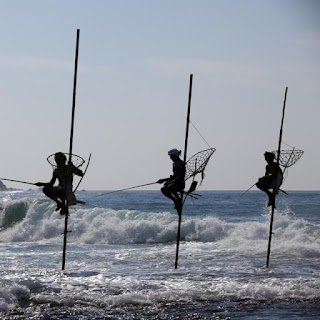 To keep cool the men walk around with long colorful skirts on, or near the fishing boats thy wrap them like big diapers. as opposed to Georgian men who pull their t-shirts up off their bellies, like small children in the US. And here is one way to fish!
Sri Lanka was a great time away, my last vacation before ending Peace Corps service. And yep, learning and experiencing more.
Women were such a mix: the burkas hid lovely smiles. These women were friendly, maybe because they can reach out in English. Or they aren't in fear of judgment that may be happening if the Middle East. They walk next to women in brightly colored saris - the most beautiful and sexy clothes, IMHO. The children wear white uniforms, with ties, walk to school. Everyone wears bright clothing, a far cry from the stylish yet monotone black of Georgia.
As everywhere, it is dangerous to generalize. The Sri Lankan men appeared diminutive, small and slender. But them our train passed the Navy base, with local sailors playing volleyball. They were all over 6 foot.
I saw a private airfield that doubled as a golf course - a great idea yet rife with potential law suits... such an American mentality, kimi...
The food - yes I came for seafood. Yes, I actually booked a guest house because Raja was a great cook, the price was right, as much as the fact that it was quietly situated on a side road 2 minutes from the beach. Tuna steak, calamari, crabs ( but missed Gary's spices) and red snapper. Other foods were different, yet equally as tasty.

Lentil donuts, coconuts, rice with curry. They have these red fruits that looked like a spinning top. When one cracks it open, blows out the seed and ants, it is really tasty! Bananas are about 6 inches long. Curry, egg rolls type things with meat or veggies in them were delicious.
LOOK RIGHT! Why can't I get used to the British drivers. Had to think of London's reminders on the streets to get the hang of it again, and not get run over.

I stayed in Weligama, and never left to see other cultural sites. I didn't plan on staying, but the beach was too inviting. I tried out surfing and actually rode the waves with Raja's son - such a great teacher. Wow!
And I snorkelled too. There were Angel Fire, snappers, sturgeon, sweetlips, and I think anenomes. The coral was very damaged from the tsunami, but you could see some new growth. And there was a lot of dead coral in the shallows.


 And speaking of tsunamis, there were a lot of crumbling buildings on the waterfront. I assumed this was just what the country looked like, until I went inland for an elephant safari. The houses and infrastructure were in much better condition. Later that night, a friend of the 'family' told us how the tsunami came and destroyed his home, which was close to the beach. They said that Japan warned the Sri Lankan government, but the government didn't know what to do about it. If you forgot about this 2004 tragedy, CNN can remind you with this good article. How odd that author Paula Hancocks mimics my exact sentiments when she talks of the tsunami survivors and I speak of our Georgian IDPs - how do people that have lost everything be so generous and supportive?
I only met one other American the entire 5 days I was in Sri Lanka! That's fun. (they are SO loud, you know). Poles, British, Australian, Romanians, Israelis, a Canadian, Spanish, Russian... The funny thing was, it was a woman I knew! How odd. Another Peace Corps volunteer had also decided to use her last vacation days in SW Sri Lanka and I joined her on the elephant safari. A nice treat.
I visited my first Buddist temple. It was so peaceful, and for some reason I was very surprised. I liked it a lot - restful and contemplative. The island inhabitants also practice Hindu, Catholic, Islam, and I saw a Ceylon Pentecostal mission.
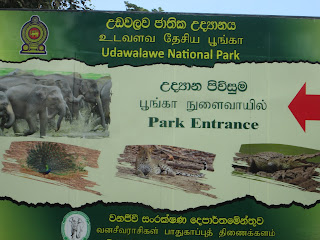 Wildlife - I think I never took the time to appreciate the birds, and all the other wildlife we have around us. But in Sri Lanka one can't ignore it. Here is my first official bird watching report, from Udawalawe National Park, along with our elephant pictures and other animals from the safari. Amazing!


 To keep cool the men walk around with long colorful skirts on, or near the fishing boats thy wrap them like big diapers. as opposed to Georgian men who pull their t-shirts up off their bellies, like small children in the US. And here is one way to fish!
 |
| Marshutkas give way to Sri Lankan tuktuks. |
Sri Lanka was a great time away, my last vacation before ending Peace Corps service. And yep, learning and experiencing more.
Women were such a mix: the burkas hid lovely smiles. These women were friendly, maybe because they can reach out in English. Or they aren't in fear of judgment that may be happening if the Middle East. They walk next to women in brightly colored saris - the most beautiful and sexy clothes, IMHO. The children wear white uniforms, with ties, walk to school. Everyone wears bright clothing, a far cry from the stylish yet monotone black of Georgia.
 |
School uniforms
|
 |
After school English classes,
in the village center
|
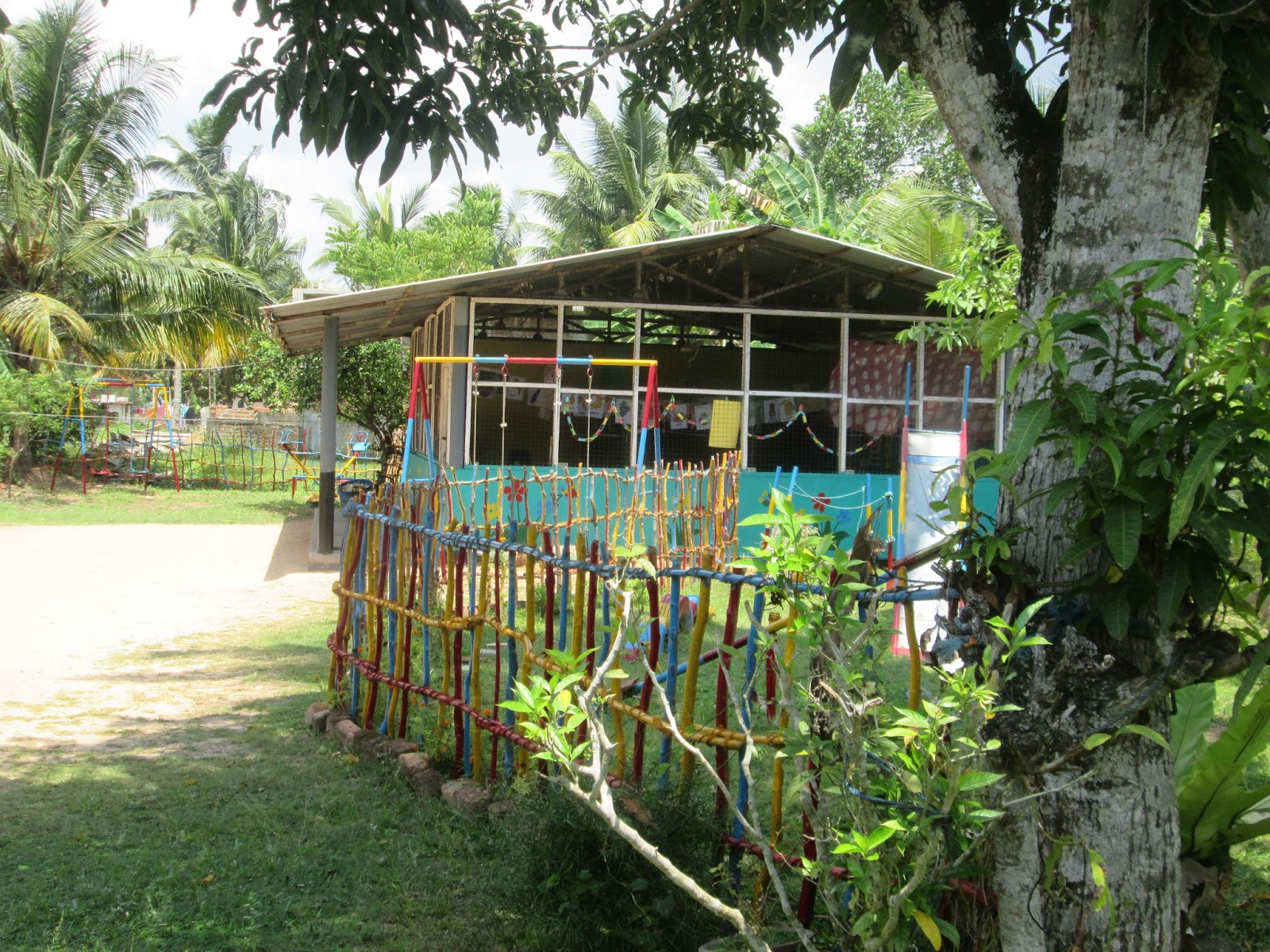 |
| Colorful school |
I saw a private airfield that doubled as a golf course - a great idea yet rife with potential law suits... such an American mentality, kimi...
The food - yes I came for seafood. Yes, I actually booked a guest house because Raja was a great cook, the price was right, as much as the fact that it was quietly situated on a side road 2 minutes from the beach. Tuna steak, calamari, crabs ( but missed Gary's spices) and red snapper. Other foods were different, yet equally as tasty.

 |
| great dinners! |
 |
| Raja's Guesthouse was a friendly place to meet visitors from all over the world. |
 |
| coconut milk with dinner, on the beach |
LOOK RIGHT! Why can't I get used to the British drivers. Had to think of London's reminders on the streets to get the hang of it again, and not get run over.

I stayed in Weligama, and never left to see other cultural sites. I didn't plan on staying, but the beach was too inviting. I tried out surfing and actually rode the waves with Raja's son - such a great teacher. Wow!
 |
| Thilina teaching me local game - like billiards on a board |
And I snorkelled too. There were Angel Fire, snappers, sturgeon, sweetlips, and I think anenomes. The coral was very damaged from the tsunami, but you could see some new growth. And there was a lot of dead coral in the shallows.
 |
Restful coves |

 |
| Early morning as we leave for whale watching |


I only met one other American the entire 5 days I was in Sri Lanka! That's fun. (they are SO loud, you know). Poles, British, Australian, Romanians, Israelis, a Canadian, Spanish, Russian... The funny thing was, it was a woman I knew! How odd. Another Peace Corps volunteer had also decided to use her last vacation days in SW Sri Lanka and I joined her on the elephant safari. A nice treat.
I visited my first Buddist temple. It was so peaceful, and for some reason I was very surprised. I liked it a lot - restful and contemplative. The island inhabitants also practice Hindu, Catholic, Islam, and I saw a Ceylon Pentecostal mission.
 |
| This was so peaceful! |
 |
| Buddhist monk statues surrounded the temple |
 Wildlife - I think I never took the time to appreciate the birds, and all the other wildlife we have around us. But in Sri Lanka one can't ignore it. Here is my first official bird watching report, from Udawalawe National Park, along with our elephant pictures and other animals from the safari. Amazing!
 |
| Indian roller |
 |
| female peacock in the tree |
 |
| Painted Stork |
 |
| male peacock |

 |
| Changeable Hawk-Eagle |
 |
| Grey Headed Fish Eagle |
 |
| Blue-tailed bee-eater |
 |
| Blue-tailed bee-eater |
 |
| water buffalo |
 |
| youngster with the family |

 |
| Two males |
 |
| happy guy |
 |
| water buffalo keeping cool in the mud |
 |
| and speaking of mud |
 |
| beautiful trees |
 |
| This was some big lizard! |

 |
| one month old elephant! |
 |
| Mugger crocodile |
 |
| love this little guy with his mom |

 |
| crocodile right next to elephants |
 |
| the baby had a hard time climbing up the water's edge |
 |
| train station back to Columbo |
 |
| village homes |
 |
 |
| Sun setting on the train ride back to Colombo to catch my 3am return flight |
After two years I have made some real changes in the way I approach life, in a slower, more focused, process. I hope I don't lose these new habits when I return home. For example, this trip I
- researched and looked at the stars intelligently. (Thanks Jim)
- actually noticed and researched the birds on google image. Wow. (Thanks Kate)
- learned to surf, and actually got up! (Thanks Thilina)
- took my first whale watching trip and saw a blue whale which they said can be up to 30 meters long, and a bryde's whale, which was about 10 meters long.
- took my first elephant safari as well. What a treat.
A peaceful, relaxing R&R. Now I'm ready for my last 3 months in Georgia, which promises to be sad and emotional, but also a happy time to see that we've done some good things and I've made some lasting friends. Stay tuned...
Subscribe to:
Posts (Atom)